Need roof repair services in Shelton?
Request an estimate and a local provider in our network will reach out. Prefer to talk? Request a callback to ask about availability.
No obligation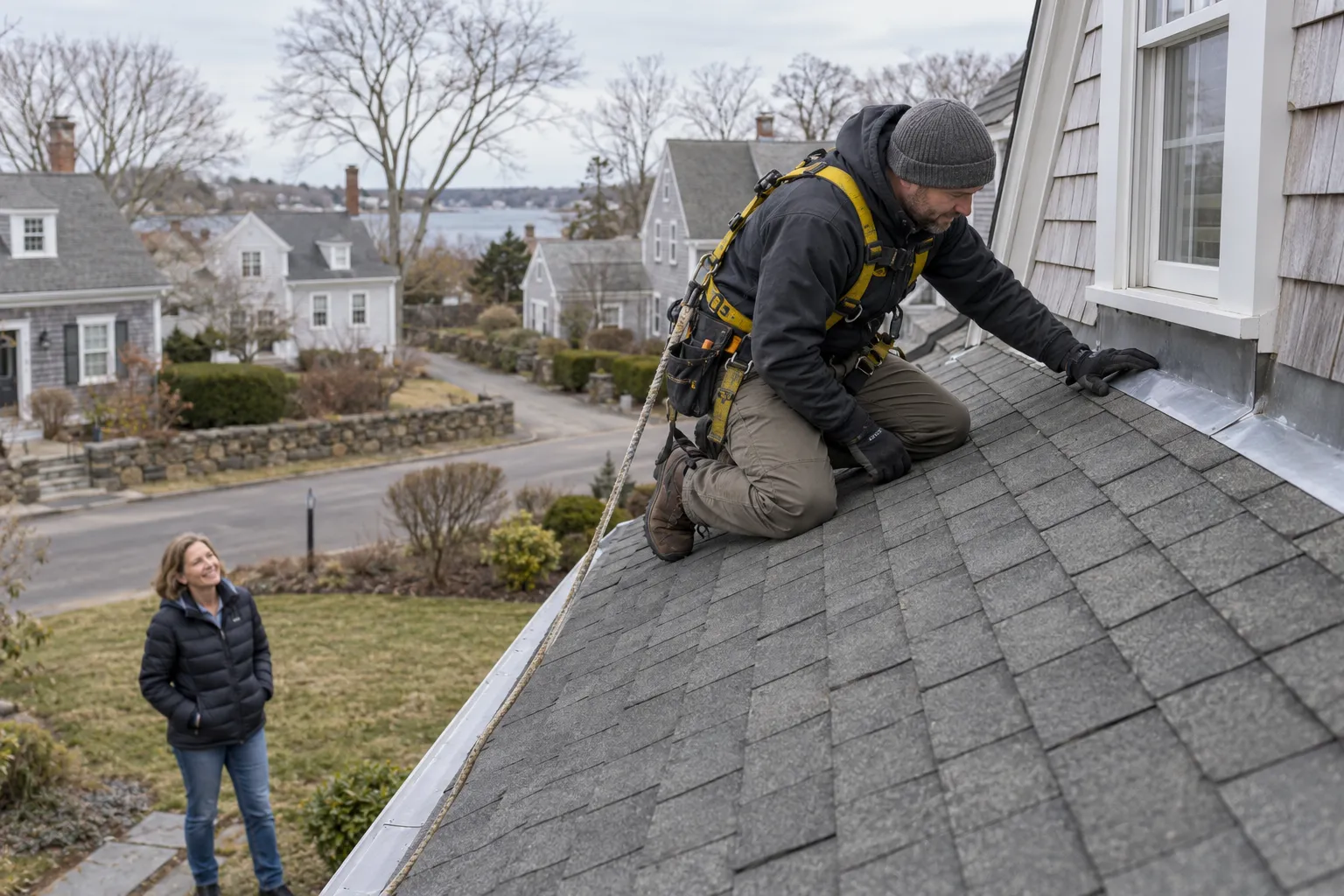
Request an estimate today
Finding a stain on the ceiling or a few shingles in the yard is upsetting, especially the first time. You do not need to know roofing words to deal with it. You just need to know what to do first, what to ask, and who does the work.
Continuetrading Roofing is a referral service. We explain the basics in plain words, then connect you with independent local roofing providers in the Shelton area. The provider looks at the roof, explains what is wrong, and gives you a written quote. They do the repair work, not us. You decide whether to move forward. Request an estimate, and a provider in our network can reach out to talk through your next step with no obligation.
A drip from the ceiling is scary the first time. Take a breath. Your roof is a lot like a raincoat. When one seam lets go, water finds the gap. The fix is usually smaller than the stain makes it look.
First, keep yourself safe. Then get a local provider to look at it.
You can help before anyone arrives. These steps are simple and safe:
Stay off the roof. Wet shingles and ice are slippery, and a fall is a much bigger problem than a leak.
Some leaks can wait for a regular visit. Others cannot. Water pouring in, a ceiling that sags, or a tree limb through the roof all need fast attention. This is when people search for emergency roof repair.
Many providers can respond quickly, but availability depends on the provider and the weather. Request a callback to check provider availability.
Think of a tiny snag in a sweater. If you leave it, it pulls and becomes a hole. A roof works the same way. Water gets under one shingle, soaks the wood below, and then spreads sideways.
Wet insulation stops working well. Wet wood can soften and grow mold. A repair that costs a little today can turn into a bigger job later.
Fill a plastic bottle with water and freeze it. It bulges, because ice takes up more room than water. The same thing happens in roof cracks. Water seeps in, freezes, and pushes the gap wider. Then it thaws and repeats.
Snowmelt in spring and ice dams at the roof edge add to the trouble. Older homes with thin attic insulation tend to see more of it.
Most repairs are small, focused jobs. Here are the ones providers see often:
Water is like a marble on a ramp. It rarely drops where it enters. It runs along a rafter first, and then shows up a few feet away. So the stain on your ceiling is only a clue.
A provider usually checks the attic for dark wood and damp insulation. Then they look outside at flashing, vents, and shingles above that spot. A good one will show you photos of what they found.
High winds and coastal storms can lift shingles or drop branches onto the roof. Storm damage repair often starts with checking for hidden gaps, not just the ones you can see from the yard.
If hail left dents across a large part of the roof, a repair may not be enough. That points toward hail damage roof replacement, which is a bigger decision for a separate conversation.
Imagine patching a pair of old boots. One patch makes sense. Patching them every month does not. A roof is similar.
Repair often fits when damage is in one area and the rest of the roof is in fair shape. Replacement may fit when leaks keep returning, many shingles are curling, or the roof is near the end of its life. Ask the provider to explain both options in writing.
A temporary fix is a bandage, not surgery. A provider may cover a damaged area with a tarp or sealant to keep water out until the real repair can happen.
Try not to climb up and do it yourself. Tarps blow off in wind, and nails in the wrong spot can create new leaks.
Not every roof is the same. Steeper Cape Cod roofs shed water well, but the small dormers and valleys can leak. Flat or low-slope sections on multi-family buildings tend to hold water, so seams and drains matter more. Metal roofs rely on tight fasteners and sealed seams. Asphalt shingles are the most common and the simplest to patch.
Ask the provider how often they work on your roof type.
Ask before you sign. Here are good questions, with what a solid answer sounds like:
Be careful if someone knocks on your door after a storm and pushes you to decide today. Walk away from large cash deposits, vague quotes, and anyone who will not put things in writing. Know your options and take your time.
Some policies may cover sudden damage, such as a storm. Check your policy to see what applies. Providers can often help document damage for a claim, so keep your photos and any written notes.
A calm plan beats a rushed one. Request an estimate, and a provider in our network can look at the roof and explain what it needs.
A local provider looks at the attic and roof surface to trace where water is getting in.
Missing, cracked, or curled shingles are swapped out to close the gaps.
Metal edges, chimney joints, and pipe boots are resealed or replaced where they have worn out.
The provider explains the problem, lists the work and materials, and gives you a written price before work starts.
Repair prices vary by roof size, height, materials, and how much hidden damage there is. These are typical U.S. ranges only. Always get a written quote from the provider before you agree to any work.
| Repair item | Typical range | Notes |
|---|---|---|
| Replace a few shingles | $150 – $500 | Price depends on roof pitch and shingle match |
| Flashing repair | $200 – $800 | Chimneys and walls take more time |
| Pipe boot or vent seal | $150 – $450 | Often the cause of small leaks |
| Roof inspection and leak tracing | $100 – $400 | Hard-to-find leaks cost more |
| Damaged decking section | $400 – $1,500 | Rot can spread, so extent matters |
| Temporary tarp cover | $300 – $1,000 | Short-term protection, not a final fix |
Tell us what you see, such as a stain, a drip, or missing shingles, using the short form.
We pass your request to an independent roofing provider who serves your part of the area.
The provider checks the roof and attic, then explains what they found.
Read the written quote, ask your questions, and decide when you feel ready.
We explain roofing in everyday words, so a first-timer can follow along and feel ready to ask questions.
You are matched with local providers who plan and do the work themselves.
You learn what to do first, what to ask, and what a fair answer sounds like.
Requesting an estimate carries no obligation, and you choose whether to move forward.
Request an estimate and a local provider in our network will reach out. Prefer to talk? Request a callback to ask about availability.
No obligationKeep people safe, move belongings, and put a bucket under the drip. Take photos of the damage. Stay off the roof. Then request an estimate so a local provider can inspect it and explain the repair options in writing.
It can be. Heavy water flow, a sagging ceiling, or storm damage with an open hole needs quick attention. Many providers can respond quickly, though availability varies. Request a callback to check provider availability in your area.
Some policies may cover sudden damage, such as storm damage. Wear and age are often not covered. Check your policy, and ask the provider to help document the damage for a claim.
Request an estimate and a local provider in our network will reach out. Prefer to talk? Request a callback to ask about availability.
No obligation